
Repair guide
How to Adjust uPVC Window Hinges: What Is Safe to Check
By the Newcastle Window and Door Repairs team
Last updated:
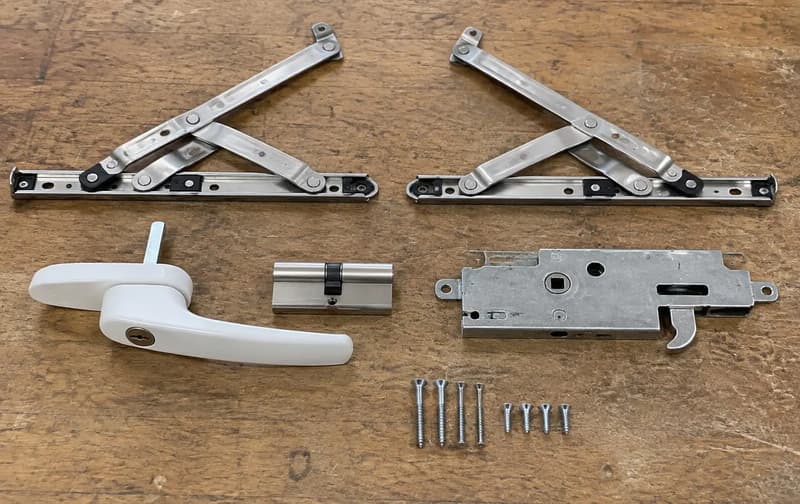
If you are asking how to adjust uPVC window hinges, first establish what sort of hinge is fitted and what has changed. A typical casement uses friction stays: linked metal arms on tracks that support the opening sash. Wear, a bent arm and a fixing problem cannot all be corrected by turning a screw.
This is a guide to identifying the fault and the limits of safe checks, not instructions to detach a heavy sash. A dropped corner or a gap on the hinge side can mean the stays need replacement. Support and access matter, particularly where the opening is upstairs or the glass is large.
Repair first
15 minute replies
Working hours
Free in-person quotes
Fully insured
Guaranteed workmanship
Need it sorted? Book window hinge repairs
Have the stay type and sash condition checked before attempting an adjustment.
Identify a friction stay rather than a door hinge
Look from a safe position at the arms joining the sash to the frame. Friction stays have a sliding track and moving links; their arrangement differs from adjustable hinges on an entrance door. Advice about lifting a door with hinge adjustment screws does not automatically apply to these window stays.
Note whether the window is side hung or top hung, where it catches, and whether the arms appear bent or loose. Do not lean out to read markings or remove fixing screws. Photographs of accessible hardware and the whole opening can help identify a suitable repair without putting the sash at risk.
Check dirt and resistance without moving the fixings
With the window stable and safe to reach, remove loose dirt from accessible tracks using a soft brush or cloth. Follow the hardware's care instructions for lubrication; do not assume every sliding surface needs the same treatment. Cleaning is maintenance, not a repair for distorted arms or worn pivots.
If a friction setting is provided, it affects the resistance of the moving stay, not the structural alignment of the whole sash. Do not use an unidentified screw as an adjustment point. A window that will not stay controlled, or that drops when opened, needs inspection rather than experimental tightening while its weight hangs on the hardware.
A gap at the hinge edge needs diagnosis
A stay that no longer guides the sash into its closed position can leave a gap, even with the handle fully shut. A worn hinge, damaged seal and faulty locking point produce different closing problems. Changing compression elsewhere will not straighten a bent stay or restore a failed pivot.
Describe the exact gap and whether the sash catches before the handle is turned. Our window will not open or close guide separates obstructed movement from locking faults. If the lever is also broken, broken window handle or hinge explains why those components should not be confused.
Window hinge repairs
- The window will not stay open
- The sash has dropped and catches the frame
- The window will not close fully at the hinge side
What replacement involves
Replacement requires matching the stay to the opening type, dimensions and sash arrangement, supporting the glazed sash, removing the worn hardware and fitting suitable new stays. The opening and closing action is then checked. The weight being supported makes this different from changing a small decorative fitting.
A damaged stay cannot be restored simply by making it stiffer. Our window hinge repairs service covers friction stay replacement; the window hinge replacement cost guide explains the existing price guidance and factors that affect a quotation. No whole-window replacement should be assumed from a hardware fault alone.
When to stop and arrange a repair
Stop if a corner drops, a fixing moves, the glass feels unsupported or the sash cannot be closed without force. Do not remove an arm or wedge the sash in a new position to see whether it improves. Those actions can transfer the load onto hardware that was not intended to take it.
For the quotation, tell us the opening type, affected corner and whether the problem is movement, draught or closure. Mention access restrictions and include safely taken photographs. Book through the existing form below for an in-person assessment rather than ordering a hinge from appearance alone and discovering that its dimensions or opening function differ.
Repairs for how to adjust upvc window hinges
Local help with how to adjust upvc window hinges
Want a professional to handle it?
Questions
Frequently asked
How to replace window hinges?
The sash is supported, the existing stay type and dimensions are matched, and suitable replacement stays are fitted before the opening and closure are checked. A glazed sash is heavy, so detaching its hinges is not a safe unsupported DIY test.
How to fix window hinges?
First distinguish dirt or friction resistance from worn pivots, bent arms or loose fixings. Maintenance may help a sound stay move, but failed supporting hardware requires an appropriate repair or replacement.
How to repair window hinges?
Repair depends on the failed component. Worn or distorted friction stays are generally replaced with suitable parts rather than bent back or made tighter; fixing and sash condition are checked alongside them.
Can you adjust window hinges?
Some hardware has a friction setting, but that is not a universal sash-alignment adjustment. The stay must be identified, and a setting cannot compensate for damaged arms or a worn pivot.
Ask about how to adjust upvc window hinges
Photo estimates sometimes possible.
Related services
Covering Newcastle and the North East.