
Repair service
Wooden Window Repair for Timber Casements
Timber casement windows open on hinges like a door, and they fail in their own way. The wood swells and sticks in wet weather, rot sets in where paint has broken down, and putty cracks until rain runs behind the glass.
We repair timber casements rather than replacing them, keeping the original frames wherever the wood is sound. For sliding box sash windows, see our separate sash window repairs page.
Guaranteed workmanship.
Repair first
15 minute replies
Working hours
Free in-person quotes
Fully insured
Guaranteed workmanship
Timber window problems we fix
- A casement that sticks or will not close
- Soft, rotten wood on the cill or bottom rail
- Cracked or missing putty
- Rain getting in round the glass
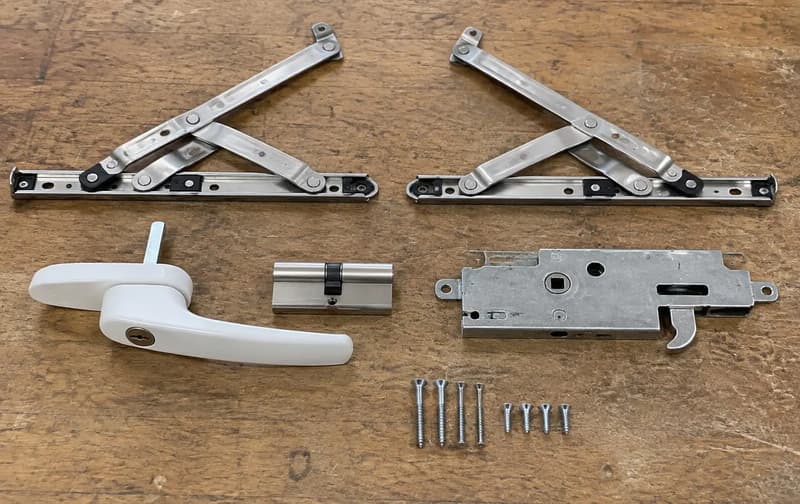
- Loose, rusted or broken hinges and stays
- Cracked panes or misted double glazed units
Sticking and swollen casements
Timber moves with the weather. A casement that closes in summer may jam in winter. We ease the edges that are binding, check the hinges have not dropped, and leave the window able to open and close all year round.
If paint has been applied over the gap, we cut it free rather than forcing the casement.
Rot repairs
Rot usually starts where water collects: the cill, the bottom rail and the joints. We cut out soft timber and splice in new wood or use a resin repair, depending on how far it has spread.
We tell you honestly when a frame is too far gone. Replacement is only recommended when a repair is genuinely not possible.
Putty, glazing and hardware
Failed putty is raked out and replaced so the glass is weathertight again. Broken panes are reglazed, and misted units replaced, in single, double or triple glazing where the frame allows.
Rusted hinges, casement stays and fasteners are replaced with matching parts.
Work out whether the casement is binding or dropping
A timber casement swings on hinges rather than sliding on cords and weights. When it becomes awkward, the way it catches matters. Timber swelling in damp weather, a painted-over gap and a dropped hinge are separate possibilities already covered by this repair service. Tell us whether the window sticks when opening, catches when closing, or changes with the weather. That is more useful than simply describing the entire frame as worn out.
Easing the edges that bind is considered alongside the hinge position. If paint has joined the casement to the frame, cutting the paint line free addresses that obstruction without forcing the opening. Worn or rusted hinges, stays and fasteners can be replaced with matching parts where needed. A casement should be assessed as an opening assembly, not just as a pane of glass surrounded by old wood.
Local timber damage is not the same as a lost frame
The cill, bottom rail and joints deserve particular attention because these are the places where water collects and rot commonly starts. Soft wood in one area does not describe the condition of every part of the window. The extent of the damage determines whether cutting out and splicing timber or using a resin repair is appropriate. We keep the original frame where the remaining wood is sound.
Replacement enters the discussion when repair genuinely is not possible, not just because there is a damaged patch. It helps to describe where you have noticed softness and whether rain is also getting around the glass. Timber work and glazing work can be needed together, but they remain different repairs. The assessment needs to account for both rather than repairing the visible wood while overlooking failed putty nearby.
Choose glazing work that fits the existing rebate
Cracked putty, a broken pane and a misted double glazed unit are three different reasons to look at the glazing. Failed putty is removed and renewed to keep the glass weathertight. A broken pane needs reglazing, while a failed sealed unit can be replaced in the frame. None of these descriptions, on its own, tells you that the whole timber window has reached the end of its useful life.
Whether single, double or triple glazing can be used depends on what the existing frame allows. The depth of the rebate matters, so a wish to change the glazing is not a promise that every timber casement can accept the same unit. For a window that slides vertically rather than swinging on hinges, the sash repair page covers the cords, weights and beads instead. Keeping these two timber window types separate makes the advice and proposed repair more relevant to the opening you actually have.
Rotten window sill repair: assess the wood beneath the paint
A rotten window sill repair starts with the extent of the soft timber, not just its painted surface. The sill, also called the cill, is exposed to water and meets the lower joints of the frame. Local damage may be suitable for a timber splice or resin repair, while sound adjoining wood is retained. Painting over softened wood does not establish that the support beneath it is sound.
Timber window repairs remain distinct from sash window repairs, which cover sliding openings. For worn opening hardware, see window hinge repairs; our repair or replace a window guide explains why frame condition determines that choice. The wider window repair service brings these separate faults together.
Related specialist repairs
Questions
Frequently asked
Can a rotten timber window be repaired?
Often, yes. Where the rot is limited to the cill or one rail we cut it out and splice in new timber or use a resin repair.
Why does my wooden window stick in winter?
Timber swells when it is damp. Easing the binding edges and checking the hinges stops it sticking without leaving a gap in summer.
Do you repair sash windows too?
Yes. Sliding box sash windows have their own page, covering cords, weights and beads.
Can you fit double glazing in a timber window?
Where the rebate is deep enough, yes. We replace glass in timber frames in single, double or triple glazing.
Does fresh paint prove a wooden sill is sound underneath?
No. A painted surface can conceal softened timber. The extent of the damage and the condition of adjoining wood determine whether local splicing or resin repair is appropriate.
Is a rotten casement sill the same repair as a broken sash cord?
No. Sill repair concerns damaged timber; a cord supports a sliding sash. The type of opening and the failed component determine which repair is relevant.
Read more
Guides that go with this repair
Discuss timber window repairs
Photo estimates sometimes possible.